
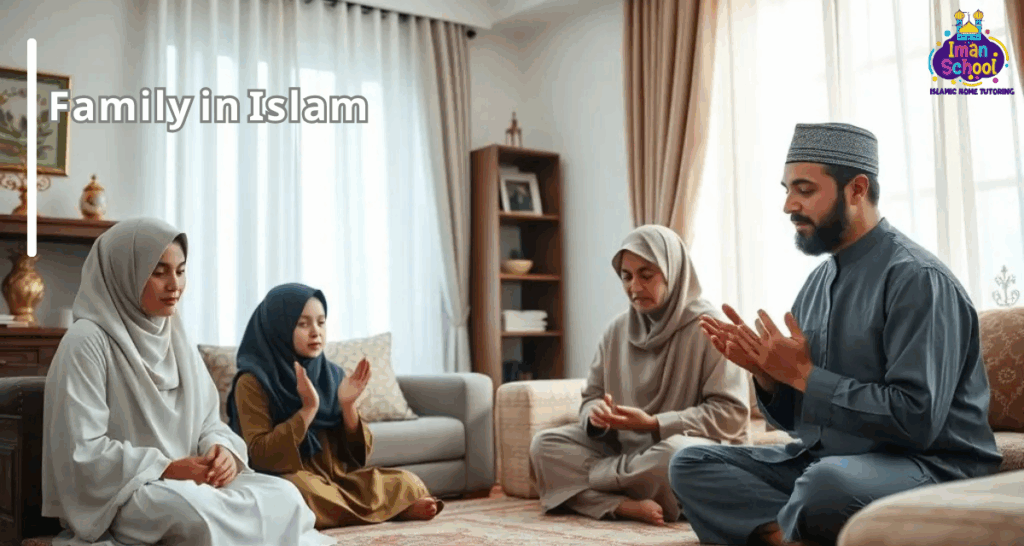
islam ka khandani nizam
The Islamic Family System is the foundation of social life, which is based on love, peace, and a balance of rights and duties.
The main basic points of the Islamic family system are as follows:
The Foundation of the Family (Nikah): In Islam, the only permissible way to form a family is through marriage. It is a sacred social contract that determines the rights and responsibilities between a man and a woman.
The Head of the Family: In Islam, the man is made the guardian or “Qawam” (head) of the family so that he can fulfill the responsibility of the financial affairs and protection of the house.
The Position of the Woman: In Islam, the wife is declared the queen of the house and the best educator of the children. It is the responsibility of the husband to provide her with bread and sustenance (food, clothing, housing).
Rights of Parents: The status of parents in the family system is very high. The Quran has commanded good treatment of parents after worshipping Allah.
Training of Children: Parents are required to give the best moral and religious training to their children so that they can become useful citizens of the society.
Rights of Relatives (Sila Rahmi): Islam emphasizes good treatment and financial support (Zakat and Sadaqat) not only for husband and wife and children but also for the extended family (grandparents, grandparents, uncles, aunts, etc.).
Inheritance System: The Islamic family system has clear rules for the distribution of inheritance, in which the share of men as well as women (daughters, mothers, wives) is also prescribed.
Important Books and Sources for Study:
The Family System of Islam: This book by Muniruddin Omari provides comprehensive information on this subject.
The Family System and Quranic Teachings: A book by Ishtiaq Ahmad Zilli and Abu Sufyan Islahi, which explains the Quranic principles for the stability of the family.
The Family System (Urdu): A book written by Al-Sayyid Saqib Misri.