
n 2026, India’s rental landscape is governed by the Home Rent Rules 2025, which are based on the Model Tenancy Act (MTA). These rules aim to formalize the rental market, protect tenant rights, and provide landlords with faster dispute resolution.
1. Mandatory Digital Registration
- Written Agreements: Verbal or handwritten informal agreements no longer have legal standing.
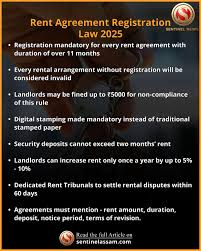
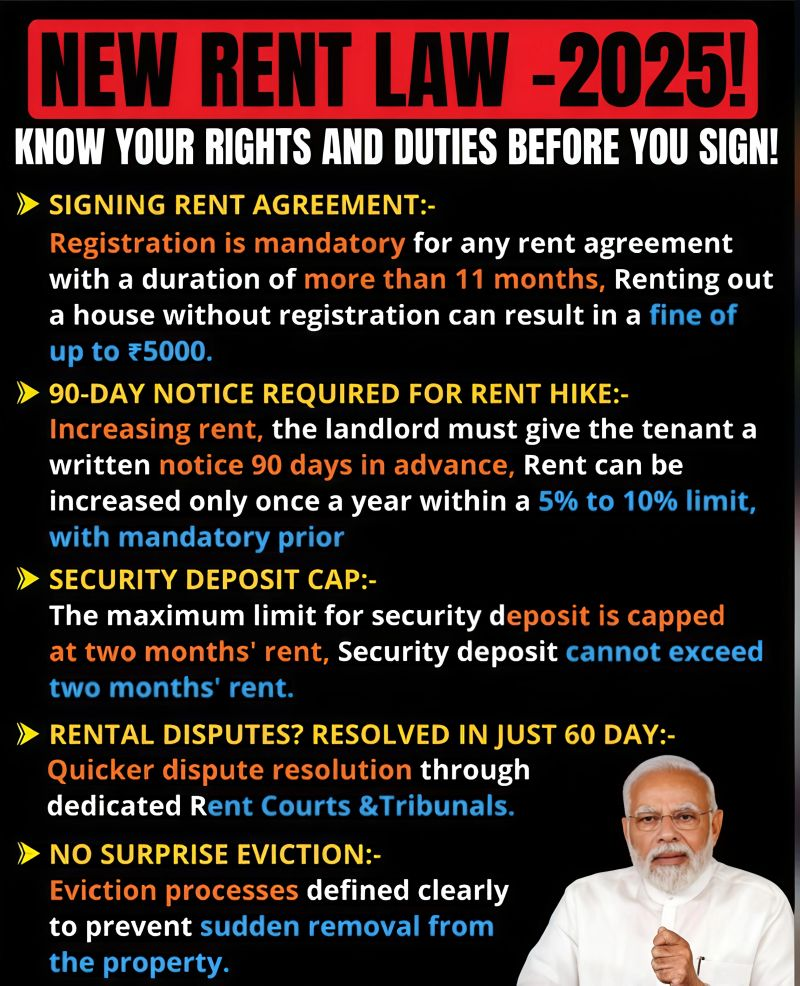
- Online Registration: All rental agreements must be digitally stamped and registered on state-specific portals within 60 days of signing.
- Penalties: Failure to register within the timeframe can attract a penalty starting from ₹5,000, with some states imposing higher fines.
2. Security Deposit Caps
- Residential Properties: Security deposits are capped at a maximum of two months’ rent.
- Commercial Properties: Deposits are capped at a maximum of six months’ rent.
- Refund Policy: Landlords must refund the deposit on the day the tenant vacates, after deducting legitimate dues for damages.
3. Rent Revision & Increases
- Frequency: Rent can only be increased once every 12 months.
- Notice Period: Landlords must provide a minimum 90-day written notice before revising the rent.
- Standard Increases: Annual hikes should typically align with the terms specified in the agreement, often ranging between 5–10%.
4. Eviction and Tenant Privacy
- No Forced Eviction: Landlords cannot use force, change locks, or cut off essential utilities (water/electricity) to evict tenants. These actions are now legally punishable.
- Legal Procedure: Eviction requires an official order from a Rent Tribunal based on specific grounds such as non-payment for two consecutive months or misuse of property.
- Right to Privacy: Landlords must provide at least 24 hours’ written notice before entering the property for inspection or repairs.
5. Maintenance and Repairs
- Defined Roles: Landlords are responsible for major structural, electrical, and plumbing repairs.
- 30-Day Rule: If a landlord fails to complete essential repairs within 30 days of notice, the tenant may undertake the repair and deduct the cost from the rent, provided they have valid proof of expense.
6. Dispute Resolution
- Dedicated Authorities: States are establishing Rent Authorities and Rent Tribunals to handle disputes.
- Fast-Track Settlement: These bodies aim to resolve tenancy conflicts, including eviction and deposit cases, within 60 days.
State-Wise Implementation Note
Since land and tenancy are state subjects, these rules apply fully only in states that have formally adopted or amended their local laws based on the MTA. States like Tamil Nadu, Uttar Pradesh, Andhra Pradesh, and Assam have already implemented aligned rules, while others like Maharashtra and Karnataka are in various stages of alignment.
Would you like me to check the specific rental registration portal and local rules for a particular state or city?
India’s new tenant laws, largely stemming from the Model Tenancy Act 2021, implemented recently as Home Rent Rules 2025, mandate digital registration of all rent agreements within 60 days, cap security deposits (2 months residential, 6 months commercial), regulate rent hikes (once a year with 90-day notice), ensure written receipts, protect against illegal eviction via Rent Tribunals, and define landlord/tenant repair responsibilities, promoting transparency and fairness. [1, 2, 3, 4, 5]
Key Changes & Tenant Rights
- Mandatory Digital Registration: All rental agreements must be digitally stamped and registered online within 60 days, with penalties for non-compliance. [1, 5, 6]
- Security Deposit Cap: Capped at 2 months’ rent for residential and 6 months for commercial properties. [3, 4, 7]
- Regulated Rent Hikes: Rent can only be increased annually with a 90-day written notice. [4, 8]
- Written Agreements: Oral agreements are discouraged; written, registered contracts are crucial for clarity. [6, 9]
- Protection from Unlawful Eviction: Landlords must use Rent Tribunals for eviction, not force; illegal actions (like cutting utilities) are punishable. [2, 9]
- Peaceful Possession: Landlords need 24-hour written notice before entry (except emergencies). [2, 9]
- Repair Responsibility: Clear division of maintenance; tenants manage minor upkeep; landlords handle major structural issues, with repair timelines specified. [2, 9, 10]
- Police Verification: Mandatory police verification for tenants before property possession. [2]
What This Means for Tenants
- More Security: Clearer terms and legal recourse against arbitrary actions.
- Reduced Upfront Costs: Lower security deposits make renting more accessible.
- Predictable Finances: Annual rent hikes are controlled, aiding budgeting.
- Digital Trail: Protects against disputes through mandatory registration. [1, 4, 5, 7, 8, 9]
These rules aim to formalize the rental market, providing a more secure and transparent environment for both tenants and landlords. [1, 5]
AI responses may include mistakes.
[2] https://x.com/CAHimankSingla/status/1994602099502715139
[3] https://docupro.in/blog/new-rent-agreement-rules-2025-in-india-complete-guide-for-tenants-landlords
[4] https://www.nobroker.in/blog/model-tenancy-act/
[9] https://bnblegal.com/article/tenant-rights-2025-post-pandemic/
[10] https://www.youtube.com/watch?v=ABK2M5U2EhQ