
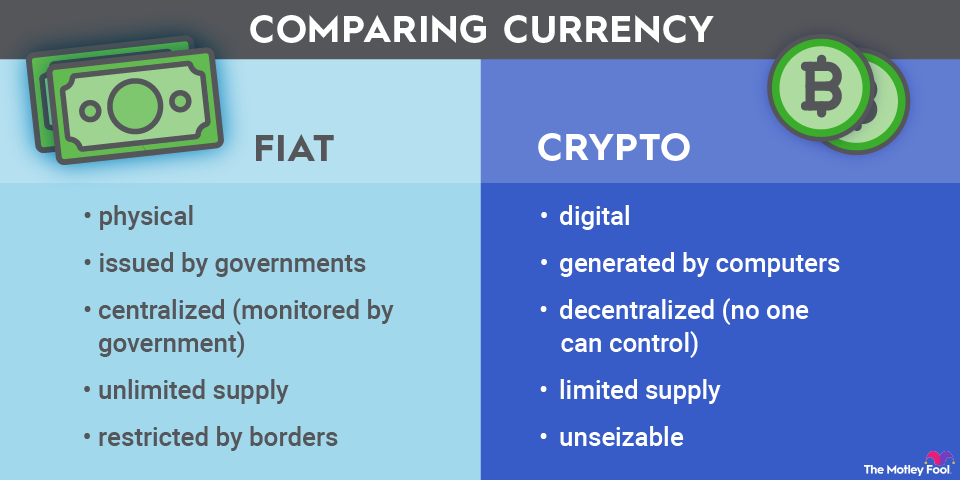
Fiat currency is a type of money not backed by physical commodities like gold or silver, but by government decree and public trust. It is declared legal tender, enabling central banks to control the money supply, interest rates, and fight inflation. Almost all modern currencies, including the U.S. dollar and Euro, are fiat money. [1, 2, 3, 4, 5]
Key characteristics of fiat currency include:
- No Intrinsic Value: Unlike gold, the paper or digital value itself is not tied to a tangible asset.
- Government Backing: Its value depends on the stability of the issuing government and trust in its economic policies.
- Legal Tender: Laws require that fiat money be accepted for payment of debts.
- Central Bank Regulation: Central banks (like the Federal Reserve or RBI) can manage the economy by controlling the supply of money. [1, 2, 3, 5, 6]
Pros and Cons
- Pros: It provides flexibility for managing inflation, interest rates, and economic stability, allowing for a more responsive financial system, say Groww and Bajaj Finserv.
- Cons: It is vulnerable to hyperinflation if governments print too much money, and its value relies entirely on public confidence, according to www.stonex.com. [2, 4, 7]
Examples
- U.S. Dollar ($USD$)
- Euro (€)
- Japanese Yen ($¥$)
- British Pound (£) [8]
Unlike cryptocurrency, which is decentralized, fiat is regulated by central authorities. [9]
AI can make mistakes, so double-check responses
[1] https://www.investopedia.com/terms/f/fiatmoney.asp
[2] https://groww.in/blog/what-is-fiat-money
[3] https://www.ig.com/en/glossary-trading-terms/fiat-currency-definition
[4] https://www.bajajfinserv.in/fiat-money
[5] https://www.sofi.com/learn/content/fiat-currency/
[6] https://www.kotakneo.com/investing-guide/articles/what-is-fiat-money/
[7] https://www.stonex.com/en/business/financial-glossary/fiat-currency/