
PLEASE DEFINE ALPHABETS, WORDS,SENTENCES,PARAGRAPHS AND CREATE AN ARTICLE ON THE TOPIC POST OFFICE IN NOT LESS THAN 500 WORDS FOR ENGLISH LANGUAGE LEARNERS BEGINNERS
Learning a new language is like building a house. You start with small bricks and use them to build walls, rooms, and finally, a complete home. In English, these building blocks are alphabets, words, sentences, and paragraphs.
Here is how they work together:
- Letters and Alphabet: A letter is a single sound symbol. The English language has 26 letters in total, starting from A and ending at Z. This complete set of 26 letters is called the alphabet.
- Words: When you put letters together in a specific order, they create a word. A word must have a clear meaning. For example, the letters p, o, s, and t combine to make the word “post.”
- Sentences: A sentence is a group of words put together to express a complete thought. A sentence always starts with a capital letter and ends with a punctuation mark, like a period (full stop). For example: “The post office is near my house.”
- Paragraphs: A paragraph is a collection of several sentences that talk about the same main idea. When you want to move to a new idea or a different point, you start a new paragraph.
All About the Post Office
An Article for English Beginners
A post office is a very important and useful place in every town and city. It is a public department where people go to send letters, documents, and parcels to their family, friends, and business partners. Even though we have modern mobile phones and emails today, the post office still plays a major role in connecting people across the world.
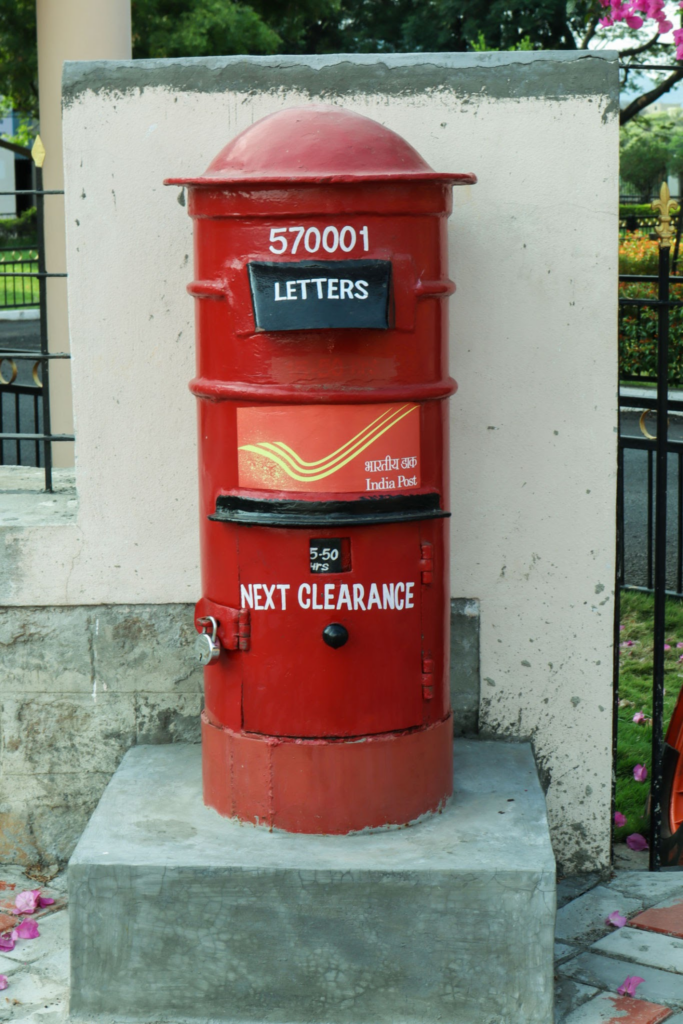
When you walk inside a post office, you will see a counter with post office workers. These workers help customers with different services. Outside or near the entrance, you will usually find a large box, which is often bright red. This is called a letter box or a mailbox. People drop their written letters into this box so the postal department can collect and deliver them.
To send a physical letter, you need a few essential items. First, you write your message on a piece of paper. Then, you put the paper inside an envelope. On the front of the envelope, you must write the complete address of the person who will receive it. This address includes their name, house number, street, city, and a special postal code. In India, this code is called a PIN code (Postal Index Number). Finally, you must buy a small piece of paper called a postage stamp from the counter and stick it on the corner of the envelope. The stamp shows that you have paid the money for the delivery service.
Post offices do not just carry paper letters; they also handle parcels. If you want to send a gift, a book, or clothes to a relative who lives far away, you can pack the items securely in a cardboard box. The post office workers will weigh your package on a scale. The cost to send the parcel depends on how heavy it is and how far it needs to travel. Once you pay, they give you a receipt with a tracking number so you can check its journey online.
In many countries, a post office offers more than just mail delivery. It also acts like a small bank. Local citizens can open savings accounts, deposit money, and buy savings certificates. This is very helpful for people living in small villages who may not have big commercial banks nearby. It provides a safe and easy way for everyone to save their hard-earned money.
The most familiar face of this entire system is the letter carrier, commonly known as the postman or postwoman. These dedicated workers wear a standard uniform and travel every day by bicycle, motorcycle, or delivery van. They carry a large bag filled with mail. Rain or shine, they walk from door to door to deliver important documents, letters, and festive greeting cards directly to your home. The post office is truly a beautiful system that helps keep communities close and connected.