
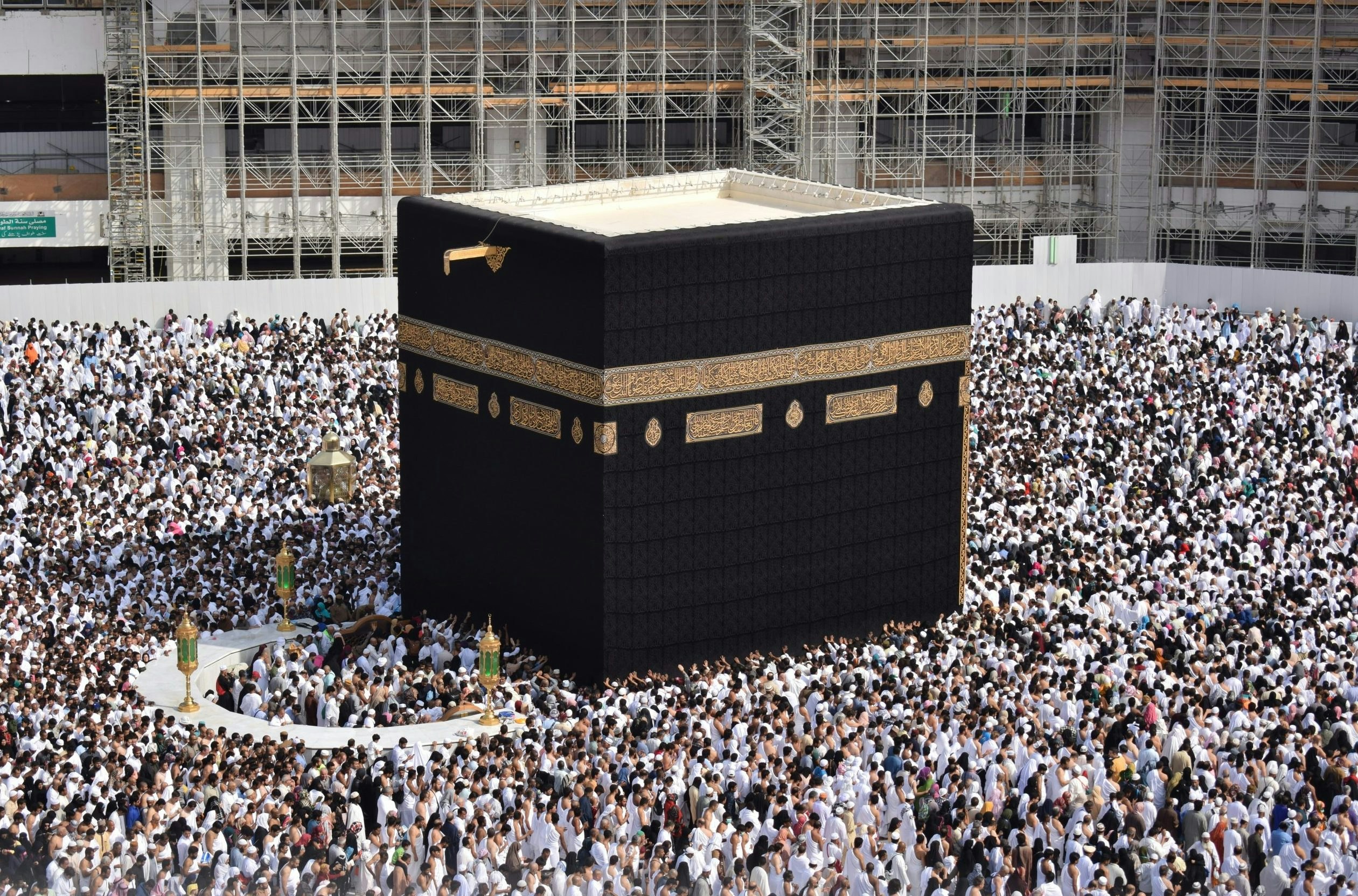
“Labbayk Allahumma Labbayk” (لبيك اللهم لبيك) is a phrase in Arabic that translates to “Here I am, O Allah, here I am” or “I respond to Your call, O Allah, I respond to Your call”. It’s a declaration of submission and devotion to God, often recited during the Hajj pilgrimage.
Explanation:
- Labbayk: This part of the phrase means “I respond to Your call” or “Here I am”.
- Allahumma: This is the vocative form of Allah, meaning “O Allah”.
- Labbayk: This part is repeated to emphasize the ongoing and lasting nature of submission and devotion.
In the context of Hajj:
- During the Hajj pilgrimage, pilgrims recite “Labbayk Allahumma Labbayk” (لبيك اللهم لبيك) repeatedly, starting when they begin their journey to the sacred sites and continuing until their ritual is completed.
- It is a sign of submission to God’s will and a way to express their devotion during the pilgrimage.
Beyond Hajj:
- The phrase can also be used outside of the Hajj context as a general expression of submission and devotion to God.
- It is a way to acknowledge God’s sovereignty and to express one’s willingness to serve Him.
Key points:
- “Labbayk Allahumma Labbayk” is a powerful phrase that signifies submission and devotion to God.
- It is often recited during the Hajj pilgrimage as a sign of devotion and submission.
- It can also be used as a general expression of devotion and submission outside of the Hajj context.
This video explains the meaning and significance of “Labaik Allahumma Labaik”:
“لبیک اللہم لبیک” (لبيك اللهم لبيك) عربی میں ایک جملہ ہے جس کا ترجمہ “میں حاضر ہوں، اے اللہ، میں حاضر ہوں” یا “میں تیری پکار پر لبیک کہتا ہوں، اے اللہ، میں تیری پکار پر لبیک کہتا ہوں”۔ یہ خدا کے لیے تسلیم اور عقیدت کا اعلان ہے، جو اکثر حج کے سفر کے دوران پڑھا جاتا ہے۔
وضاحت:
لبیک: جملے کے اس حصے کا مطلب ہے “میں آپ کی پکار کا جواب دیتا ہوں” یا “میں حاضر ہوں”۔
اللہم: یہ اللہ کی آوازی شکل ہے، جس کا مطلب ہے “اے اللہ”۔
لبیک: یہ حصہ تسلیم اور عقیدت کی جاری اور دیرپا نوعیت پر زور دینے کے لیے دہرایا گیا ہے۔
حج کے سلسلے میں:
حج کے دوران، حجاج کرام “لبیک اللھم لبیک” (لبيك اللهم لبيك) بار بار پڑھتے ہیں، جب وہ مقدس مقامات کی طرف سفر شروع کرتے ہیں اور اپنی رسم مکمل ہونے تک جاری رکھتے ہیں۔
یہ خدا کی مرضی کے سامنے سر تسلیم خم کرنے کی علامت ہے اور حج کے دوران اپنی عقیدت کا اظہار کرنے کا ایک طریقہ ہے۔
حج سے آگے:
اس جملے کو حج کے سیاق و سباق سے باہر بھی خدا کے لیے تسلیم اور عقیدت کے عمومی اظہار کے طور پر استعمال کیا جا سکتا ہے۔
یہ خدا کی حاکمیت کو تسلیم کرنے اور اس کی خدمت کے لیے اپنی رضامندی کا اظہار کرنے کا ایک طریقہ ہے۔
اہم نکات:
“لبیک اللھم لبیک” ایک طاقتور جملہ ہے جو کہ خدا کے لیے سر تسلیم خم کرنے اور عقیدت کا اظہار کرتا ہے۔
یہ اکثر حج کے سفر کے دوران عقیدت اور تسلیم کی علامت کے طور پر پڑھا جاتا ہے۔
اسے حج کے سیاق و سباق سے باہر عقیدت اور عرضداشت کے عمومی اظہار کے طور پر بھی استعمال کیا جا سکتا ہے۔
اس ویڈیو میں “لبیک اللہ اللہ لبیک” کے معنی اور اہمیت کی وضاحت کی گئی ہے:
Hajj (or Haj) is the annual Islamic pilgrimage to Makkah, Saudi Arabia, a mandatory religious duty for all capable Muslims (physically and financially) to perform at least once in their lifetime, symbolizing submission to Allah, seeking forgiveness, and strengthening faith by following the rites established by the Prophet Muhammad, occurring annually in the Islamic month of Dhu al-Hijjah over about five days. [1]
Key Aspects of Hajj
- One of the Five Pillars: Hajj is a fundamental pillar of Islam, alongside the declaration of faith, prayer, charity (Zakat), and fasting (Sawm) during Ramadan, notes Britannica and MuslimSG.
- Obligatory Duty: Every adult Muslim who is physically and financially able must undertake the journey to Mecca at least once.
- Spiritual Journey: It’s a profound spiritual experience focused on seeking forgiveness, purifying the soul, and demonstrating devotion to God.
- Location: The pilgrimage centers around the Kaaba in Mecca, the holiest city in Islam, in Saudi Arabia.
- Timing: Hajj takes place from the 8th to the 12th (or 13th) of Dhu al-Hijjah, the final month of the Islamic lunar calendar.
- Rituals: Pilgrims perform specific rites, including circumambulating the Kaaba (Tawaf) and walking between the hills of Safa and Marwah. [2]
Who Performs Hajj?
- Any Muslim who is physically, mentally, and financially capable, and can provide for their family during their absence.
- Governments, like India’s, help facilitate the journey for their citizens, with bodies like the Haj Committee of India organizing support and arrangements for pilgrims.
In essence, Hajj is a deeply significant, once-in-a-lifetime religious obligation for Muslims worldwide, uniting millions in devotion to God in the sacred city of Mecca.
AI responses may include mistakes.
[2] https://www.hajcommittee.gov.in/
Ihram is the simple white clothes that Pilgrims wear while performing Hajj or Umrah. For performing Hajj Muslims have to follow all the rules that come with the rituals related to Pilgrimage. For performing Hajj or Umrah Muslim man or woman has to enter in Ihram. Ihram is two plain sheets of white cloth that Muslim men wrapped around the body while leaving some parts of the body uncovered. While for Muslim women Ihram is a complete covering of the body with only face and hands revealed. A woman can’t cover her face even if she wants to because it is prohibited during Hajj. The reasons for wearing the Ihram is to make the person humble, whether the person is rich or poor, everyone will be wearing the same thing. It shows unity, as the Muslims become one as they perform Umrah or Hajj. Not just in regard to clothing, it is also a reminder of the shroud that we will wear when we depart this earth.
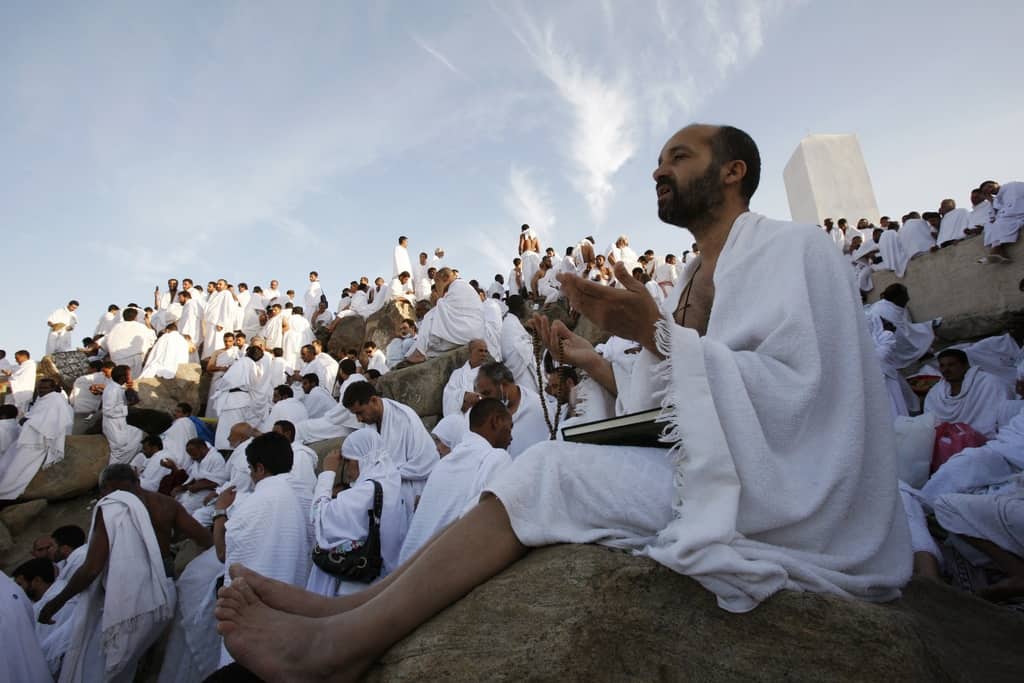
Rules of Ihram Upon entering in the state of wearing Ihram one should have to do ghusl or to take shower and perform wudu (ablution) for purification of the body. Must make the intention of entering into the Ihram while reciting Talbiyya لَبَّيْكَ اللَّهُمَّ لَبَّيْكَ ، لَبَّيْكَ لَا شَرِيكَ لَكَ لَبَّيْكَ ، إِنَّ الْحَمْدَ وَالنِّعْمَةَ لَكَ وَالْمُلْكَ ، لَا شَرِيكَ لَك once. If in some cases, water is not available then it is permissible to skip the shower and just perform ablution to continue Hajj rituals. After the Niyyat is done, it is also recommended to pray two Rakat Salah to finally step into the pure state of Ihram. In the Holy Quran, Almighty Allah says: “O you who believe! Fulfill (your) obligations. Lawful to you (for food) are all the beasts of cattle except that which will be announced to you (herein), game (also) being unlawful when you assume Ihram for Hajj or ‘Umrah (pilgrimage). Verily, Allah commands that which He wills” (Quran, 5: 1). It is obligatory for every pilgrim to wear Ihram before passing the Miqat. Our beloved Prophet Muhammad (SAW) stated in one of His hadith: “One shouldn’t pass the Miqat unless he/she is in the state of Ihram.” (Al-Bukhari) Prohibitions of Ihram Once an individual enters in the state of Ihram after making the intention then following actions are prohibited:
 Men can’t wear stitched clothes but women can wear their ordinary clothes.
- Men are not allowed to cover their head and women can’t cover their face.
- Shaving or cutting the hair and the nails. It says in the Noble Quran: “and do not shave your heads until the Hady (sacrificial animal) reaches the place of sacrifice” (Quran, 2:196).
- Do not use perfume, women can’t wear makeup and for men wearing socks or shoes is also prohibited.
- Hunting animals is also prohibited. Almighty Allah says in the Quran: “O you who believe! Kill not the game while you are in a state of Ihram (for Hajj or ‘Umrah (pilgrimage)).”(Quran 5:95)
- Sexual intercourse is also prohibited. In Holy Quran Allah (SWT) says: “So whosoever intends to perform Hajj therein (by assuming Ihram), then he should not have sexual relations (with his wife), nor commit sin, nor dispute unjustly during the Hajj.” (Quran, 2:197)
May Allah (SWT) give us the opportunity to perform Hajj and rightly follow the rules and rituals of performing pilgrimage in the correct state of Ihram! Ameen