
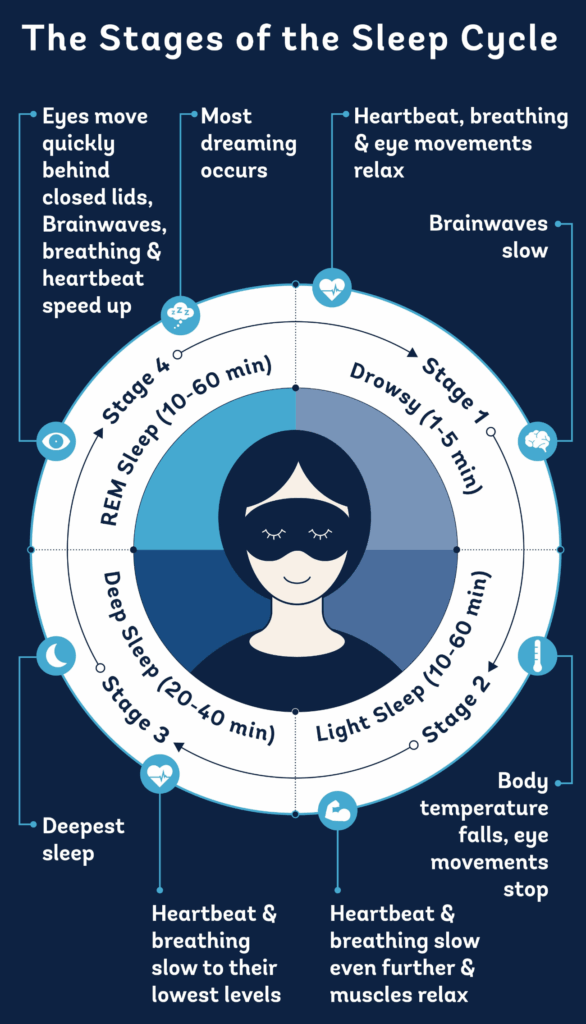
Every person’s progress through each sleep stage is unique, based on factors including age, physical health, and life stressors. Sleep cycles can even vary for the same person from night to night.4 While you may not have control over every factor that affects your sleep, there are steps you can take to ensure a healthy progression through the sleep stages so you’re getting the rest you need.
Decoding your sleep cycle
To establish your natural sleep rhythm, start by taking note of your own sleepiness. How tired are you throughout the day? When do you feel alert? If you find yourself nodding off during a Zoom call or on your subway ride to work, you may be sleep deprived.
These steps can help put you on the path to getting the sleep you need5:
- Track Your Sleep. Track your sleep patterns, including the time you go to bed, the time you wake up, and whether you wake up during the night (and, if so, for how long). A handy tool to help you do this is found here6. Note how you feel in the morning. Refreshed? Tired? Your sleep tracker can make you more aware of your sleep patterns and help you identify when you are getting enough—and when you’re falling short.
- Prioritize your sleep. Once you understand your needs, make sleep a priority. First and foremost, make sure you go to bed at a time that allows you to get the hours you need. Regular exercise and a healthy diet can play a huge role in regulating sleep. Try to avoid too much alcohol or caffeine, especially in the hours right before bed. And you may also want to consider taking a melatonin supplement, like Unisom® Simple Slumbers ™, to help you fall asleep. Melatonin works with your body’s natural sleep cycle, signaling that it’s time to sleep. It can help you fall asleep more easily and improve sleep quality.
- Try a sleep reset. Over the course of two weeks or so, pick a consistent bedtime and stick to it. Choose a time that’s early enough to allow you to wake up naturally without the aid of an alarm. At first you may sleep a bit longer than usual, as you pay off any accumulated sleep debt. But after a few days you’ll establish a consistent pattern in which you sleep about the same number of hours each night. This is the amount of sleep that your body naturally needs. Try to maintain this pattern consistently throughout subsequent weeks.
- Establish healthy sleep habits. Create a consistent routine that signals to your mind and body that it’s time to go to sleep. Wind down with 30 minutes of reading or gentle activities like stretching or listening to music. Avoid bright lights and consider using blackout curtains. Before bedtime, limit screentime on tablets, phones, and computers, which can keep your mind active suppress melatonin.7
A sleep pattern is your individual, regular cycle of sleeping and waking, encompassing the duration, quality, and the distinct stages (REM and NREM) your brain goes through nightly, typically in about 90-minute cycles, which can be affected by age, habits, and health. Understanding your pattern helps assess if you’re getting restorative rest (7-9 hours for adults) or experiencing issues like insomnia, which disrupt these natural rhythms. [1, 2, 3, 4, 5, 6, 7]
Key Components of Sleep Patterns:
- Circadian Rhythm: Your internal 24-hour body clock that regulates sleepiness and alertness. [7]
- Sleep Cycles: A full cycle includes stages of light NREM (N1, N2), deep NREM (N3/Delta Sleep), and vivid REM sleep, repeating roughly every 90-120 minutes. [2, 8]
- Duration & Quality: The total time asleep and how well you sleep (deepness, fewer awakenings). [2, 5]
What’s “Normal”?
- Adults: Aim for 7-9 hours per night, cycling through 4-5 full sleep cycles. [2, 6]
- Infants: Have different patterns, sleeping more overall and cycling differently. [7]
Factors Influencing Patterns:
- Age: Newborns sleep differently than teenagers, who sleep differently than seniors. [7, 9]
- Health Conditions: Disorders like insomnia or neurological issues can disrupt cycles. [1, 10]
- Lifestyle: Stress, medications, caffeine, and inconsistent schedules can alter patterns. [1, 11]
When to Pay Attention:
- Disrupted Patterns: Difficulty falling asleep (initial insomnia), frequent waking (intermittent insomnia), or excessive daytime sleepiness. [3, 10, 12]
- REM Rebound: More intense dreams or disorientation after sleep deprivation, as the body tries to catch up on REM sleep. [11]
AI responses may include mistakes.
[1] https://www.sciencedirect.com/topics/immunology-and-microbiology/sleep-pattern
[2] https://www.sciencedirect.com/topics/medicine-and-dentistry/sleep-pattern
[3] https://dictionary.apa.org/sleep-pattern
[4] https://focuskeeper.co/glossary/what-is-sleep-patterns
[5] https://www.sciencedirect.com/topics/nursing-and-health-professions/sleep-pattern
[6] https://www.sciencedirect.com/topics/neuroscience/sleep-pattern
[7] https://www.ncbi.nlm.nih.gov/books/NBK551680/
[8] https://my.clevelandclinic.org/health/body/12148-sleep-basics
[9] https://www.britannica.com/science/sleep
[10] https://www.sciencedirect.com/topics/biochemistry-genetics-and-molecular-biology/sleep-pattern
[11] https://www.webmd.com/sleep-disorders/sleep-101
[12] https://www.sleepfoundation.org/how-sleep-works/sleep-dictionary
A sleep pattern refers to the regular cycle of sleep and wakefulness that occurs over a 24-hour period, encompassing the timing, duration, and internal structure of rest. These patterns are primarily governed by two biological systems: circadian rhythms (your internal clock) and sleep-wake homeostasis (the building pressure to sleep the longer you stay awake).
The Structure of a Sleep Cycle
A typical night’s sleep for an adult consists of 4 to 6 cycles, each lasting approximately 90 to 120 minutes. Each cycle is divided into two main phases:
- Non-REM (NREM) Sleep: Divided into three stages (N1, N2, and N3), moving from light to deep sleep.
- N1 (Light Sleep): The transition between wakefulness and sleep.
- N2 (Light Sleep): Heart rate slows, body temperature drops, and the brain processes memories.
- N3 (Deep Sleep): The most restorative stage, where the body repairs tissue, builds bone and muscle, and strengthens the immune system.
- REM (Rapid Eye Movement) Sleep: Characterized by intense brain activity, rapid eye movement, and temporary muscle paralysis; this is when most vivid dreaming occurs.
Types of Sleep Patterns
Individuals may follow different schedules based on lifestyle or biological needs:
- Monophasic: Sleeping in one consolidated block at night (typical for most adults).
- Biphasic: Sleeping in two segments, usually a long night period and a shorter daytime nap.
- Polyphasic: Breaking total daily sleep into multiple short periods throughout the day.
How Patterns Change With Age
Sleep architecture evolves significantly throughout life:
- Infants: Spend roughly 50% of their sleep in REM and follow a polyphasic pattern (waking frequently for feeds).
- Adolescents: Require 8–10 hours; often experience a “circadian delay,” naturally preferring later bedtimes.
- Older Adults: Tend to sleep more lightly, wake up more frequently during the night, and may wake earlier in the morning.
To better understand your own rest, you can use tools like the Sleep Diary provided by the National Heart, Lung, and Blood Institute or consult the Healthy Sleep Guide from the National Institute of Neurological Disorders and Stroke.